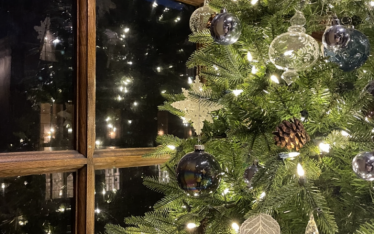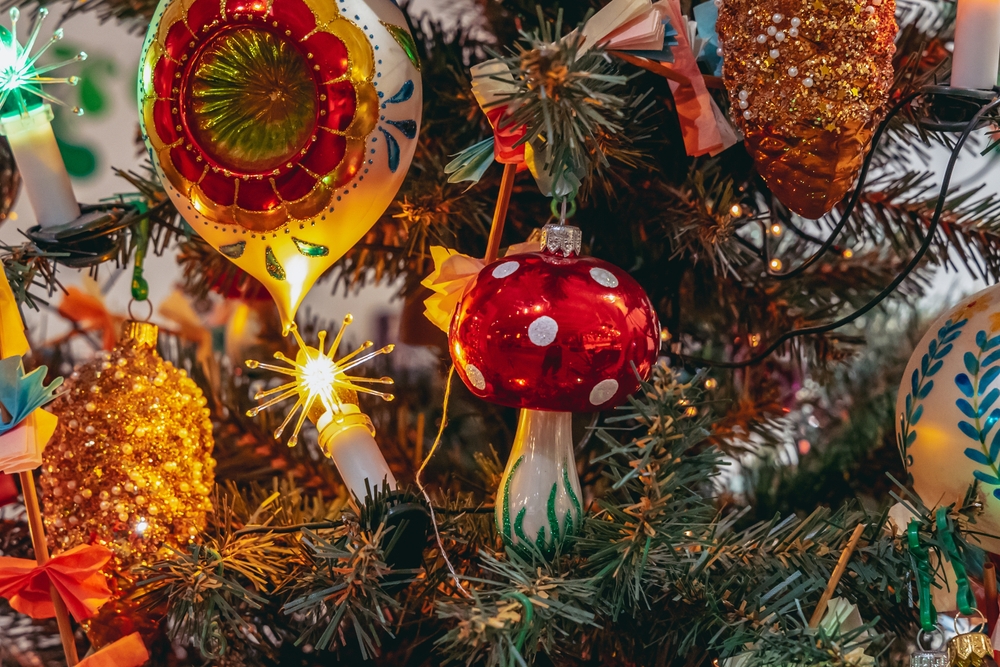
As Christmas lights bounce off shiny baubles — or bombki, as they’re amusingly called in Polish — it’s worth pausing for a moment. Not just to admire our decorating skills, but the Christmas ornaments themselves and to consider: where did these glittering little wonders come from?
Poland is renowned around the world for its beautiful glass baubles — admired for their intricate hand-painted designs, durability and the craftsmanship poured into each one. Today, it is the fifth-largest exporter of glass baubles globally. And yet, despite this sparkle-filled legacy, Poland wasn’t the first to invent them…
Baubles from the forest
We know the Christmas tree tradition itself comes from Germany. In Poland, however, an earlier custom – the Podłażniczka reigned supreme. Evergreen branches hung upside down from the ceiling and was decorated with apples, nuts and fruit (see this post). In centuries past, particularly walnuts were luxury items. Legend tells us that the very first glass bauble was born out of necessity. In the glass-blowing town of Lauscha, tucked into the Thuringian Forests of Germany, a craftsman named Hans Greiner found himself unable to afford the apples and nuts to decorate his tree. So he blew an apple out of thin glass instead and started making glass fruit and nuts.
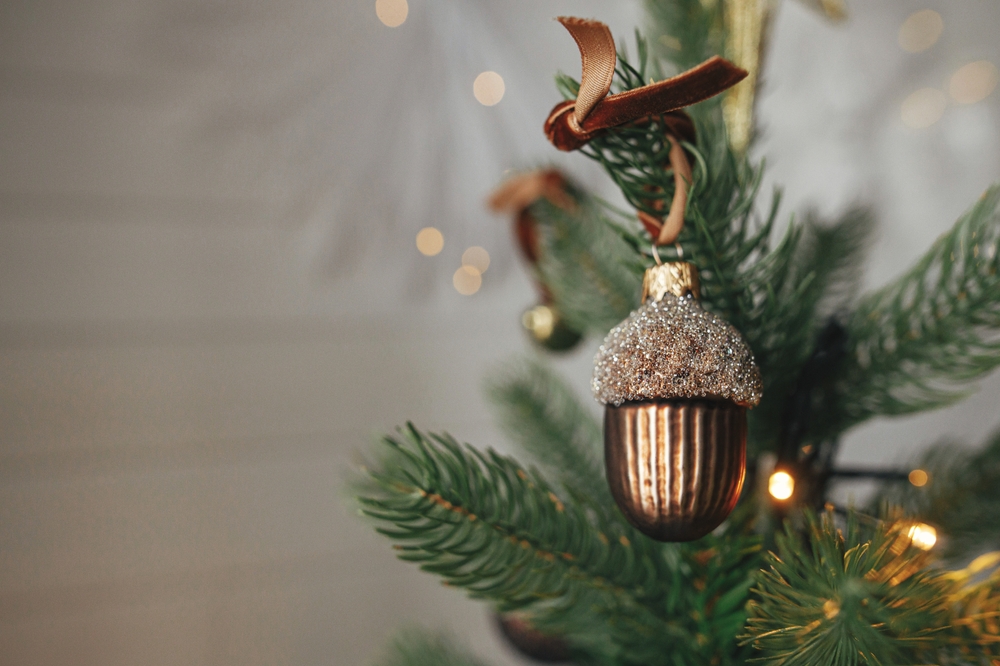
According to an article in the Financial Times, Hans actually came from a long line of master glassmakers. He was a descendant of the founders of the Greiner and Mueller glassworks, producers of elegant glassware for Europe’s wealthy since the 16th century. By 1847, blowing heated glass tubes into clay forms, allowed for delicate, intricate shapes to be created. These ornaments were then silvered on the inside using the newly discovered method of silvering glass with silver nitrate by Justus von Liebig a German chemist. Earlier methods had used lead or mercury!
Baubles everywhere
The ornaments were an instant hit and the first catalogue was produced in 1860. German sellers crossed the Atlantic and charmed North American households after Frank Woolworth started importing their baubles. Much like the Christmas tree took on quickly in the UK. In 1848, an illustration of Queen Victoria and Prince Albert gathered around a candle-lit Christmas tree was published. As was often the case, what the Queen did, everyone followed. Christmas trees (and then baubles) became the thing.
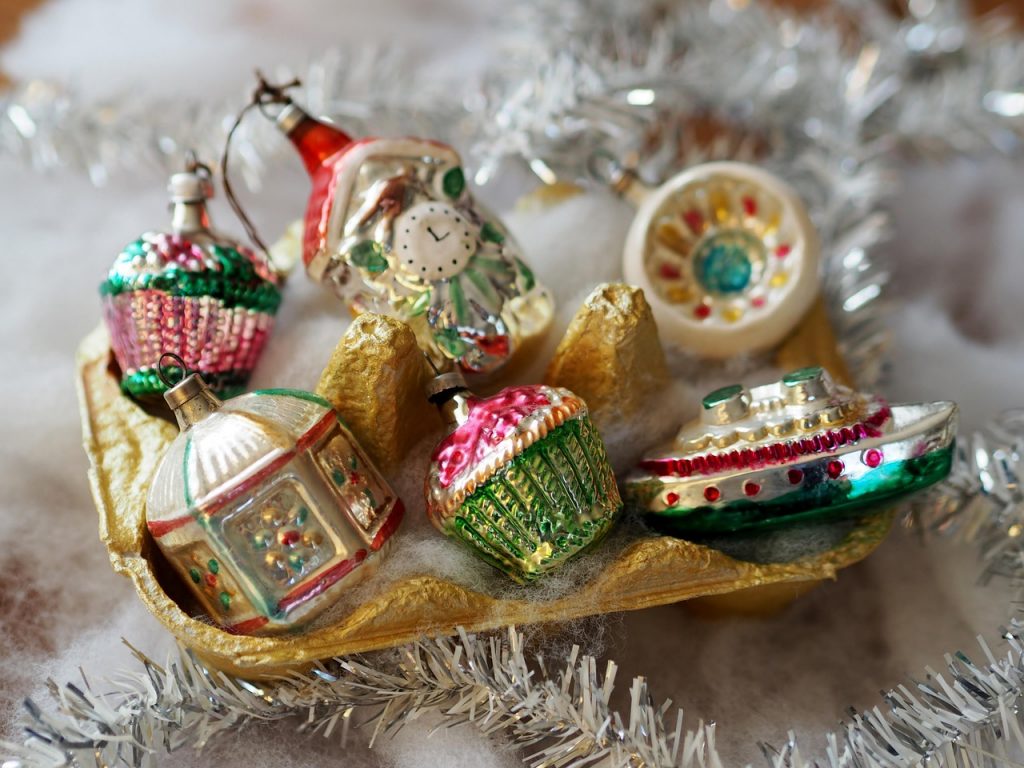
Wealthier Polish homes joined in when baubles first appeared in the 1870s though it was the beginning of the 20th Century when the trend really took off. At first, baubles were imported from Germany, but they were soon embraced by local artisan workshops, often run by families. Men blew the glass and women painted increasingly elaborate designs. And creativity knew no limits — animals, angels, clocks, toys, birds with real feathers, and objects you didn’t know you needed hanging from a pine tree. Today there are at least three museums of baubles in Poland, in the south east Nowa Dęba, Staszów and the south west Milicz.
Traditions remained
In towns and cities, baubles, bells, paper chains and candles became popular. Villages, however, stuck loyally to older customs. In the Kresy regions (the eastern borderlands), trees were decorated with hand-carved wooden ornaments and dried plums wrapped in paper. Sound familiar? Yes — they’re the ancestors of today’s beloved Polish “plums in chocolate.”
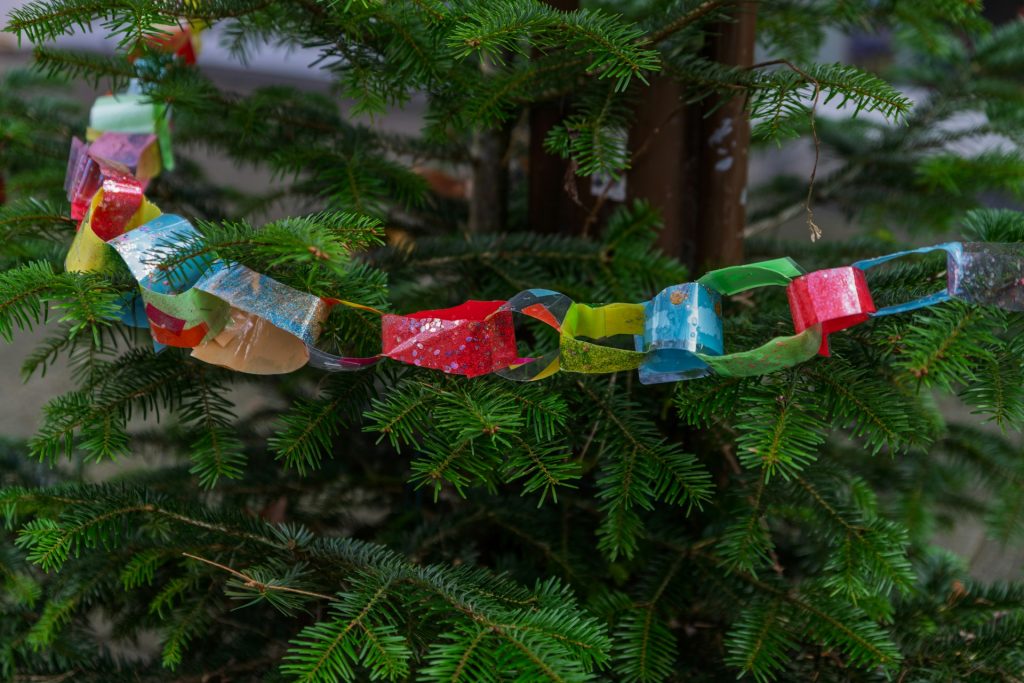
Every ornament carried meaning. Apples for fertility, nuts – love and prosperity, bells – good news. Paper chains meant different things depending on where you lived — either the bonds of family or, more somberly, the weight of sins. In the 19th century and up to 1918 when Poland was divided between three neighbouring countries, paper chains also symbolised national enslavement. Angels protected the home. Gingerbread and sweets celebrated the joy of Jesus’ birth and were believed to promise happiness in love and a long life.
Some traditions continued as I remember sweets tipped out of paper bags onto the table for us children to tie sewing threads on them before hanging on the tree. Every now and then, one had to mysteriously disappear into a mouth.
From local craft to global markets
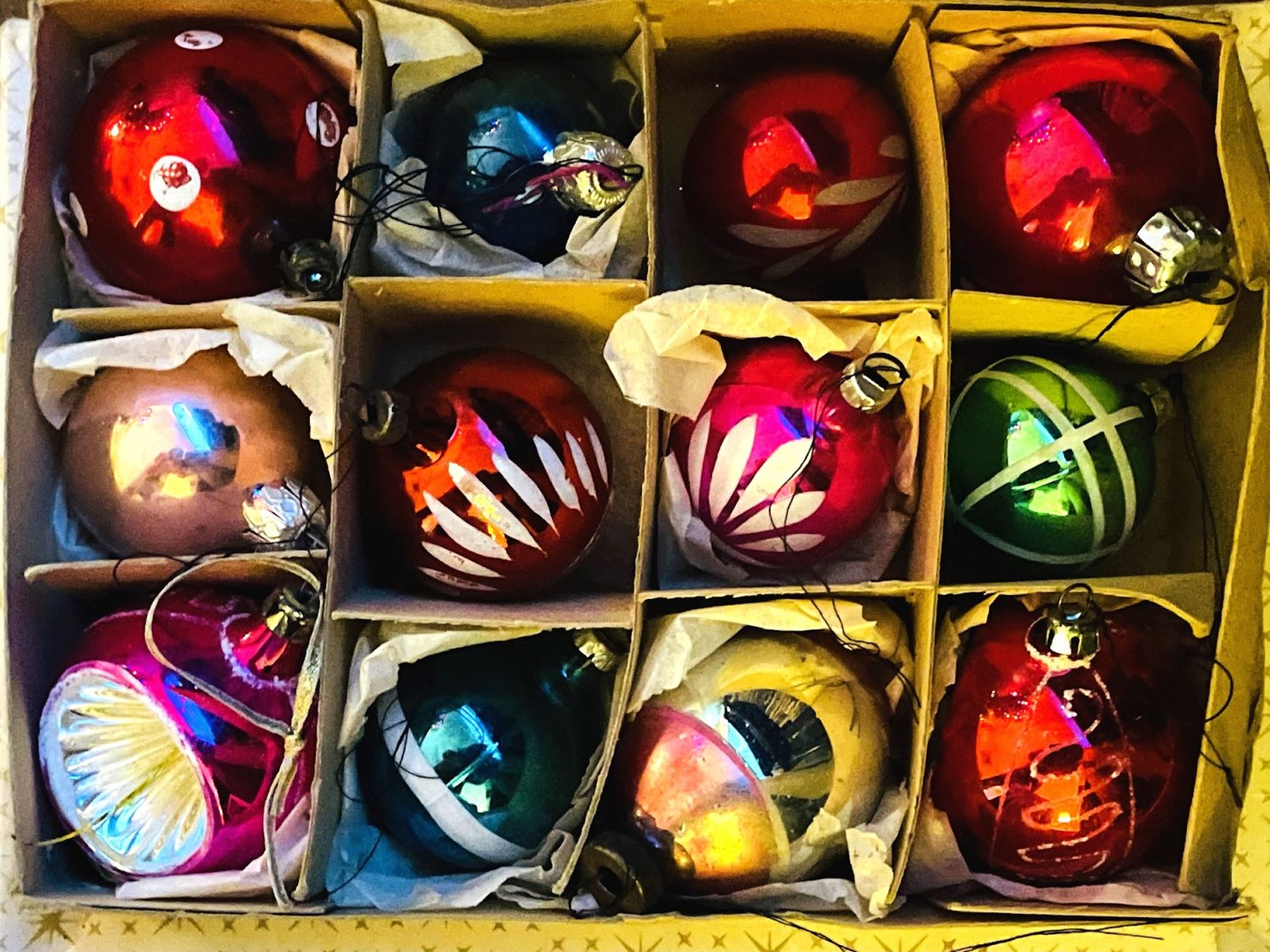
By the early 20th century baubles from Lauscha were being imported in vast quantities to North America. In the UK and Poland, baubles only became a true household staple for all after the 1950s, when mass production took over. Some people still have the bells and toadstools that have become collectors items.
Today, the survival of traditional techniques like hand painting and gilding have made ornaments feel luxurious again. Chinese exports flood the markets however the glass painted bauble holds strong. Polish companies now offer personalised designs and demand — particularly from the United States — is booming.

Some manufacturers, like Northstar, produce solely for export. As its owner, Piotr Metzel proudly puts it: “The ornaments made here are the Mercedes-Benz of baubles. Shiny, reliable, and built to impress.” In fact the snowman carrying Santa is one of theirs and another custom made Polish product – the harcerka (girl scout) above, came to me from a good friend in Detroit.
Star or tree top ornament
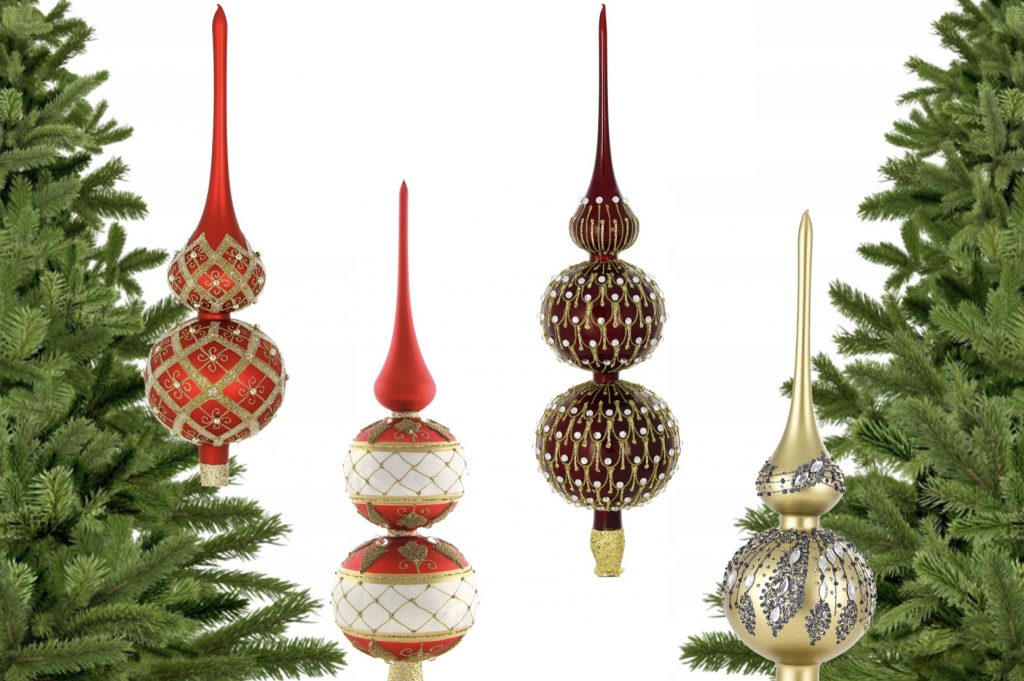
Many people have stars at the top of the tree, the final flourish, which echoes the Star of Bethlehem that guided travellers to Jesus’ birthplace. There is also an older tradition of elaborate glass szpice (spiked tree tops) in Poland. To me they look wonderfully exotic, like something from an eastern temple. They still point heavenward – a reminder of the star that guided the wise men through the night.
Bombki or Bańki?
Most people call baubles bombki, but in Kraków and the south east they were known as bańki (little bubbles), while in the Kurpie region (north central Poland) they were called cacki (little trinkets). In Silesia, you’ll hear glaskugle, borrowed from the German kugel, meaning ball.

Once, returning from Poland with a carefully packed bauble, I was asked by airport security what was in the box. Smiling confidently, I began to say it was a “bomb…”. but the smile vanished mid-word as realisation dawned and I hastily added the -ka. So yes — these ornaments don’t just decorate trees. Occasionally, as well as being easily smashed, they can also get you into trouble!
Wishing you all Wesołych Świąt – Happy Christmas, time spent with loved ones, or remembering them, meaningful conversations and above all, health and happiness!
Photos if not credited are from Shutterstock. Sources amongst others:
- www.trade.gov.pl “Poland is the third largest exporter of glass baubles in Europe”
- www.krakow.wyborcza.pl “Świąteczne ozdoby z Brzeska podbiły Amerykę”
- www.ft.com “The business of baubles — and the town that invented them”
- www.agronomist.pl “Bańki, cacka czy galskugle, czyli bombki”

 1.Tracing Family History pre-WW2
 2. Tracing Family History WW2