January and February are quiet months with Blue Monday, bad weather and New Year intentions already forgotten. Except that being Polish, being brought up with tales of a whirl of parties throughout the Karnawał – the carnival season, makes winter the most festive time of the year.
The word still sparks a thrill in me: gliding across the dance floor in evening dress. Whilst many people hibernate, across Poland and much of Europe – the carnival is winter’s glittering rebellion.
A long farewell
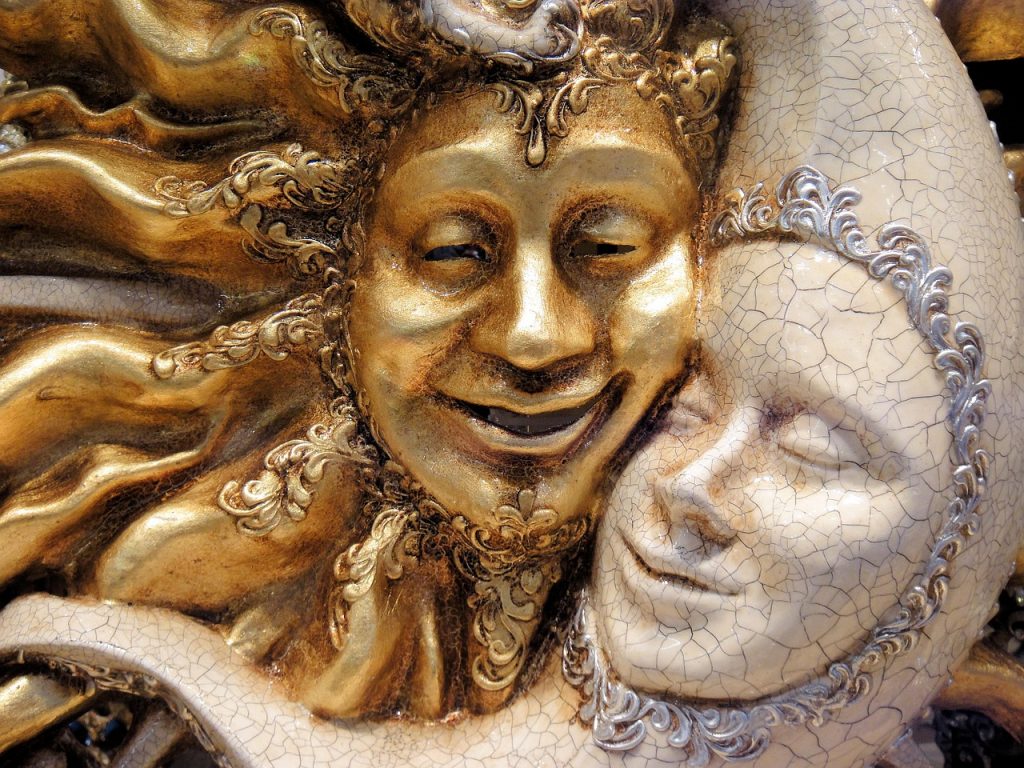
This is a time of masquerade balls, dancing, music and joyful excess. It traditionally offered release after Advent’s restraint and flowed on from the start of Christmas joy. Running from the Three Kings January 6th until Ash Wednesday, Karnawał took its name from carnem levare – farewell to meat. This was a long and lavish enjoyment of meat before the final goodbye especially if Easter was late in the year! Its roots stretch back to ancient Greek rites honouring Bacchus, god of life and renewal. In the Middle Ages, Venice became carnival’s beating heart and these traditions reached Poland through the Italian born Polish Queen Bona Sforza. The season had already been known, however, as Zapusty.
Hospitality knows no bounds
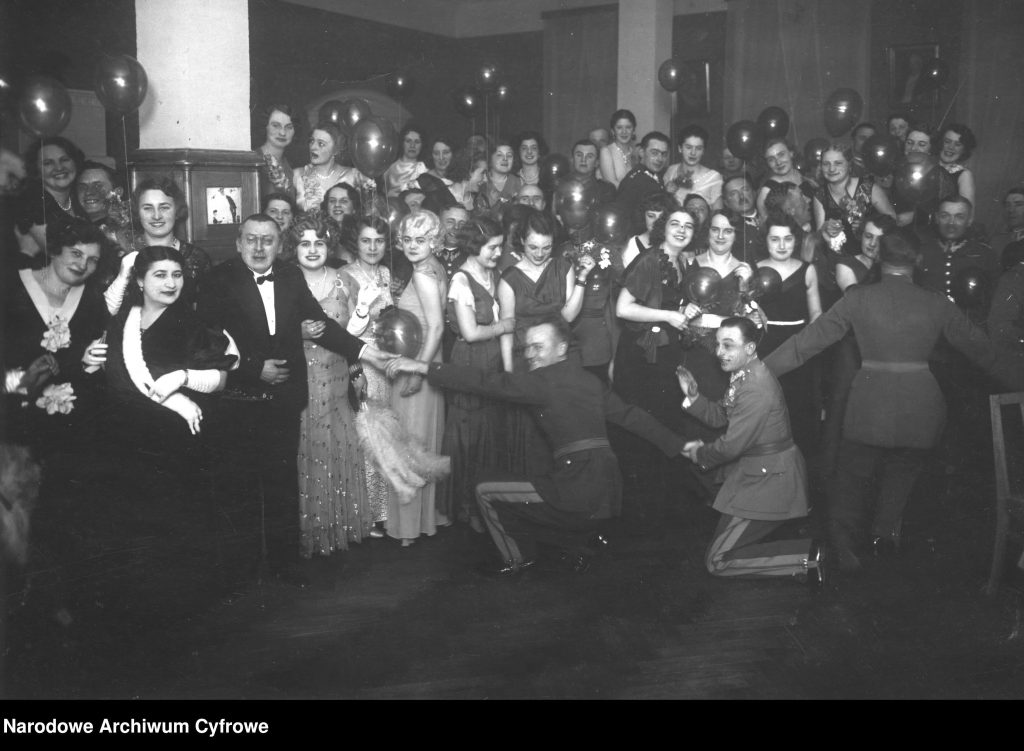
At the centre of Polish Karnawał stood the dwór – the manor house of landowners rich and poor alike. Hospitality followed the Polish rule of “Gość w domu, Bóg w domu” (guest in the home is like God in the home). Tables bowed under heavy bowls of bigos (hunters stew), game, bread. cakes, doughnuts and vodka. Until the early part of the 20th century all of Poland partied. Masquerade balls called Reduty were very popular. The latest gowns were ordered for grand balls in aristocratic palaces and country homes. In merchant homes, in remote dwory (manors) and in humble peasant homes the aim in each was to eat and be merry and dance the night away. The Kraków folk song says: Szły wiechcie z but i drzazgi z podłogi” – Bits flew from their boots and splinters from the floor! Anyone could start a party as described by Eliza Orzeszkowa, the 19th century novelist. “Mother sat down at the piano and played a quadrille….then a polka and a mazurka. Eight pairs of young people danced enthusiastically and the improvised party was a great success”. By the 1920’s the Polish military, charities and societies would organise their own balls.
Dancing until dawn
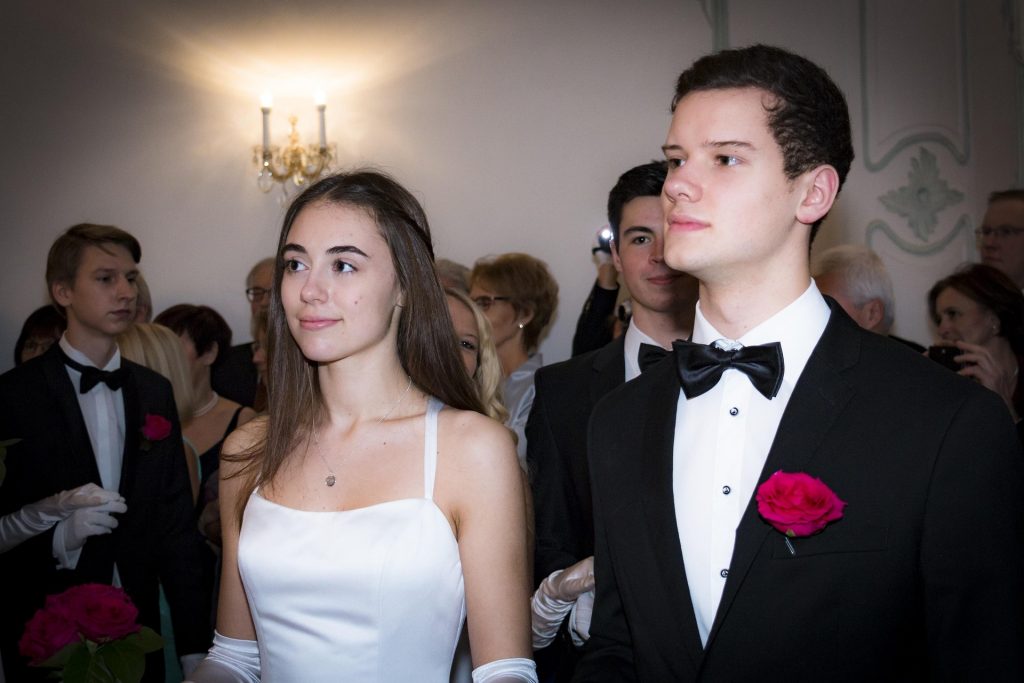
Every evening started with polonaises, waltzes, polkas, quadrilles, ending in the early hours with a Biały Mazur – a white mazur called as such due to the dawn light. Karnawał was also the time for parents to present young ladies for marriage. Dance cards and fans were used to good effect. Bale kotilionowe – cotillion balls were known well into post war years. Ladies and gentlemen were given decorative flowers or ribbons in various colours, pairing these up to meet and dance together. The 20th century writer Stefan Żeromski wrote in “Popioły” (Ashes) that they danced: “so the room seemed to creak in its very beams. The commotion of merriment boiled within it like foaming water. Health, youth and surging life turned the dance into a flood of joy. They revelled with full hearts, caroused from a deep, pent-up need of the soul, danced in the fullest sense of the word, until they dropped.”
Zapusty traditions
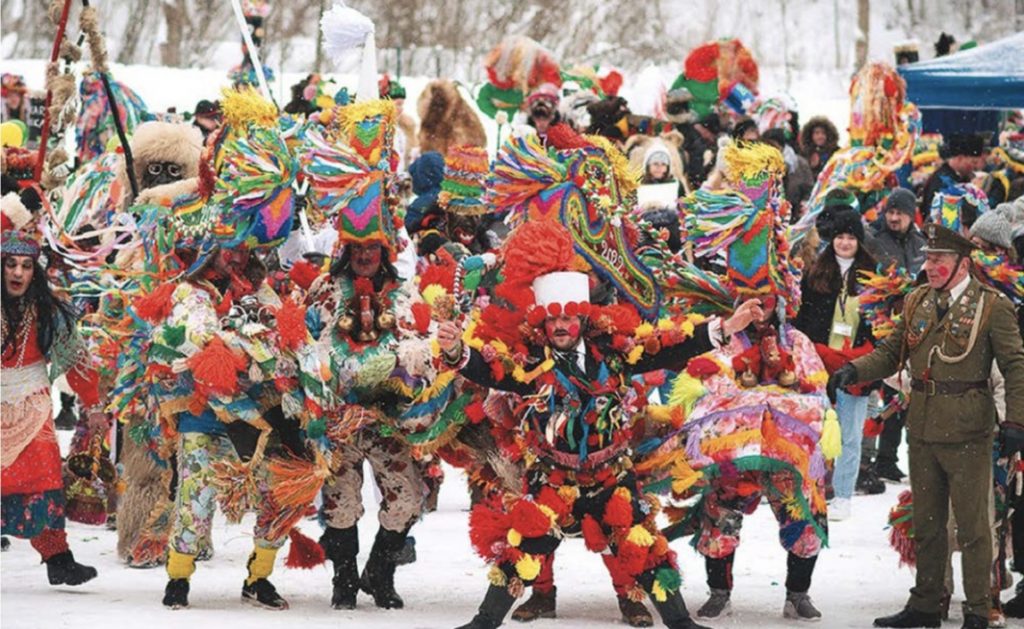
In villages the usual tight rules of behaviour were also loosened. There was less work in the fields, leaving time for visiting neighbours and impromptu parties. There were nativity plays to act out, with a myriad of characters. Towards the beginning of Lent dressing up in animal figures to awaken nature – often as goats, bears and storks. Zapusty meant the last days of meat, the last hurrah. Nowadays just the last few days before Lent are called this. Each region had its own variations and some colourful traditions continue to this day.
Sleigh rides
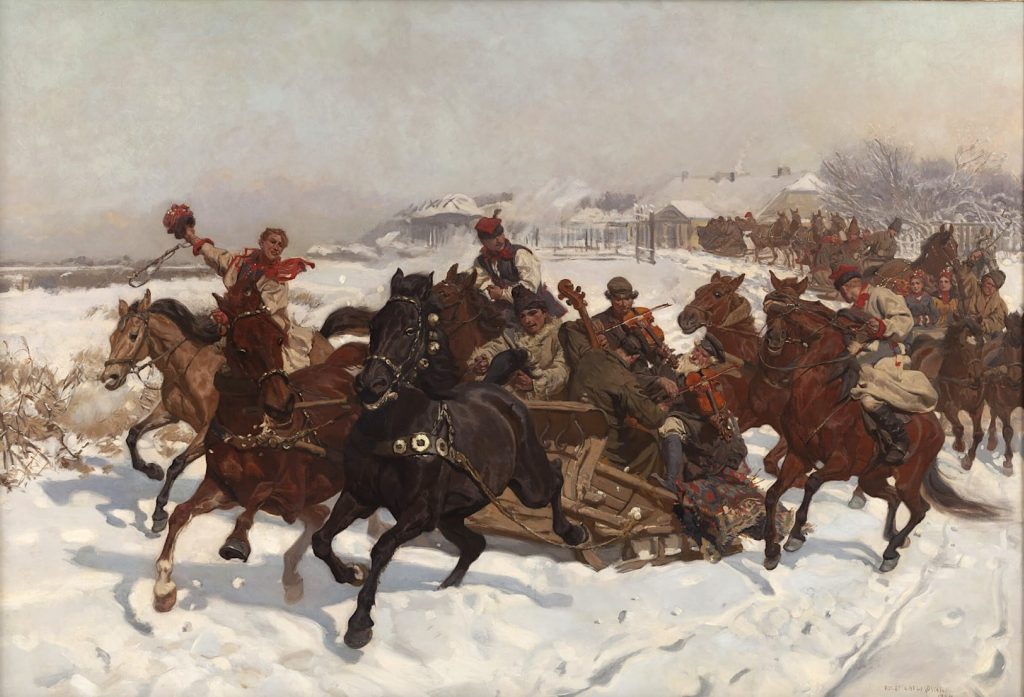
It being winter, Kuligi (sleigh rides) were all the rage during Karnawał. In some dwory, large carved ornate 18th century sleighs were painted in gold and silver. Some were in the shapes of swans, griffins and eagles. Groups of people accompanied by musicians and flares would be whisked through forests and fields on the crisp snow. Every dwór in the neighbourhood would be visited, knowing they would be welcomed in for partying and feasting.
Polish balls abroad
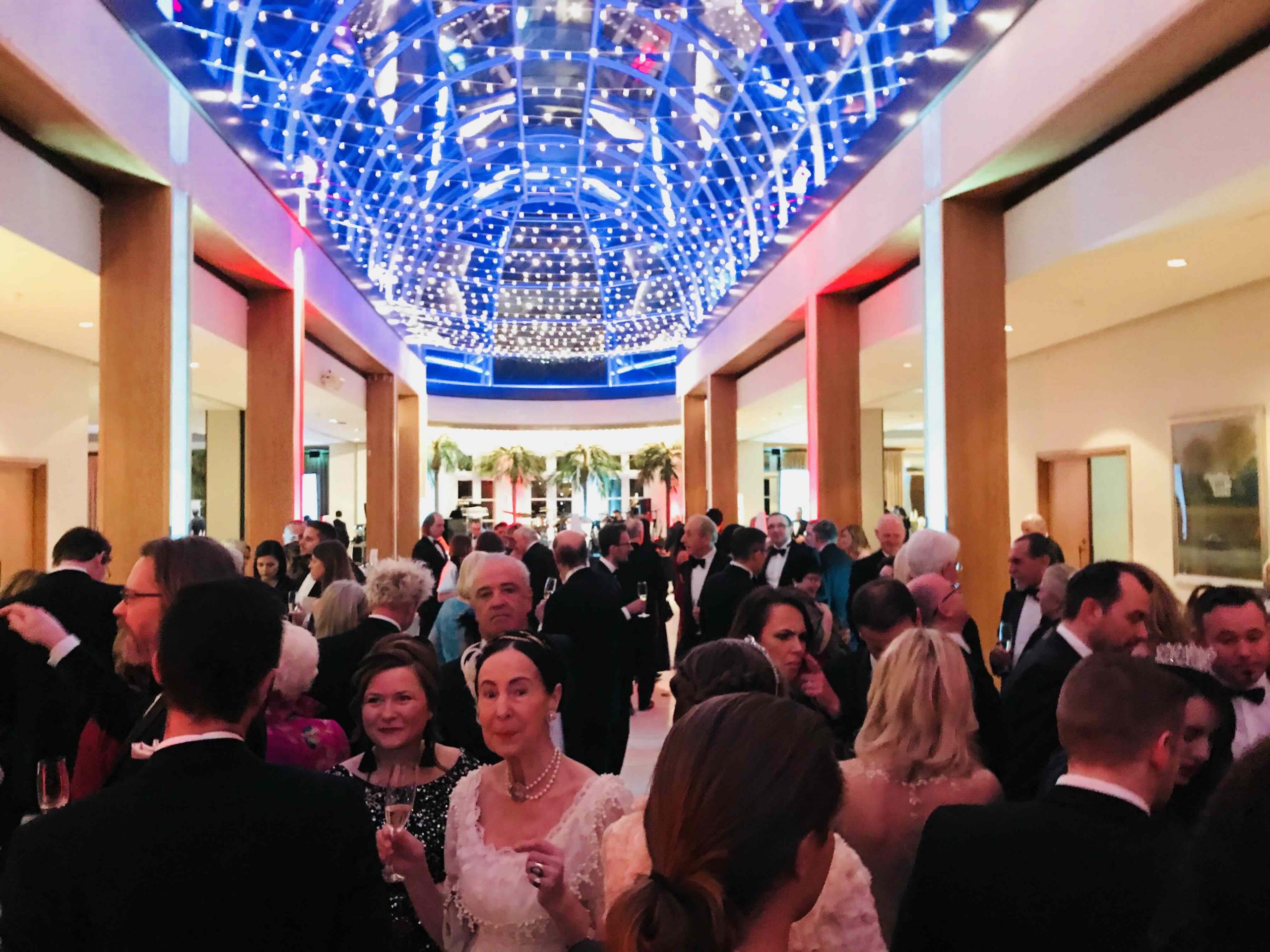
Many Karnawał balls continue in Poland and abroad. In London, the opulent Bal Polski opens each year with all of the guests dancing the polonaise in some of the grandest hotels. This charity event was born in 1970 when the Polish Government-in-Exile had its own Treasury needing funds. Inspired by the great emigre balls in 19th century, General Anders was the first patron, with British royals and Ambassadors following. Each year money is raised for a different charity and dance groups often perform the mazur to great applause as in this video.
Many British friends over the years have attended with me and they all fall for the glamour. It remains an invitation to throw caution to the wind, dress to the nines and socialise. The tradition of opening a dance with the polonaise has also endured in Poland, with high school students dancing it for their studniówka dance, 100 days before their final exams in May.
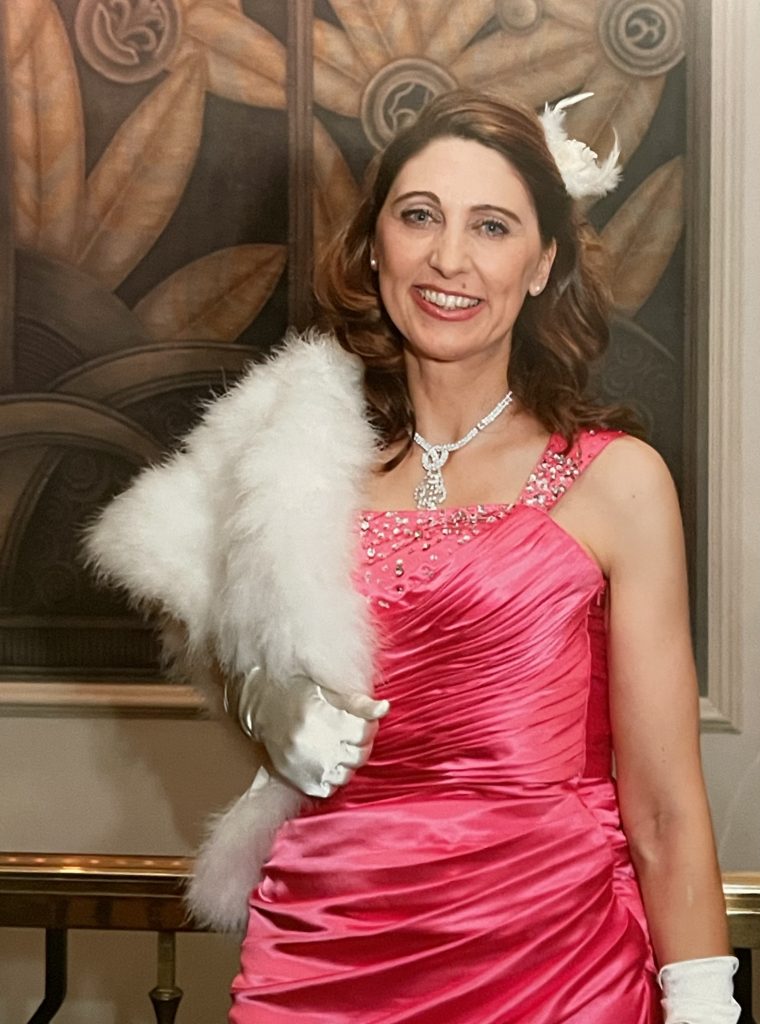
I’ve experienced the Karnawał in grand hotels and at local dances in modest Polish centres, eating herrings, dancing in lines and organising lotteries but its power is always the same. Dancing is defiance agains the cold, dark stretch of winter. Long after the music fades, Karnawał leaves you with the knowledge that joy can be chosen even in the darkness, and especially then.
 1.Tracing Family History pre-WW2
 2. Tracing Family History WW2