“Krakau, Krakau, hier Sarnaki”, began the radio message, overheard by “Pawłowicz” from his workplace in the Sarnaki brewery. A stream of coded words followed. For the occupying Germans, it was a routine military communication. For the Polish resistance, it was a vital piece of a much larger puzzle.
The resistance in my family’s hometown of Sarnaki, on the eastern plains of Poland (Podlasie voivodeship), played a key role in capturing the V2 rocket, the world’s first ballistic missile. It led to Operation “Most III” also known as Wildhorn III, the daring airlift of V2 segments from Poland to the UK.
Overnight terror
As early as 1939, Hitler had boasted of a new secret weapon. In the years that followed, the Polish underground systematically gathered intelligence on the V-weapon programme. This enabled the British to bomb the first research site at Peenemünde in 1943. From 1944 the V1 rocket known as the “doodle-bug” wreaked havoc on London and other towns. Carrying 850kg of explosive it would descend sharply giving a buzzing sound for 15 seconds before exploding on impact, leaving a 20-30 metre-wide crater.
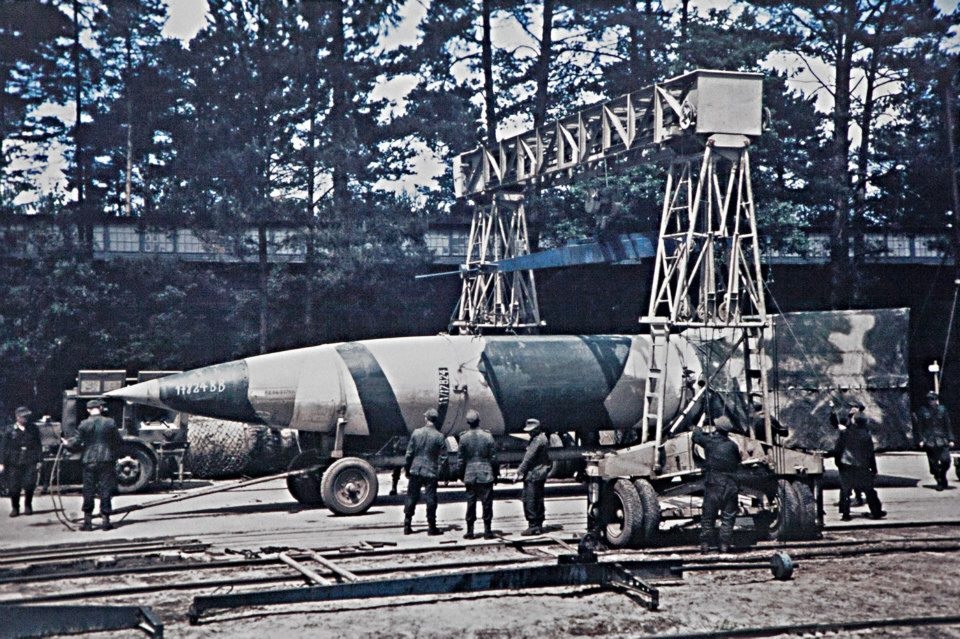
By contrast, the V2 was even more dangerous. As the first long-range guided ballistic missile, it travelled at supersonic speeds, struck with no warning and carried an explosive payload of 950kg. To test it, the Germans had chosen Blizna in occupied South East Poland, far from the reach of British bombers, for launch testing. The rockets were to land 300 km away, in the Sarnaki area.
The town of Sarnaki was transformed almost overnight by the German invasion of Poland in 1939. Families expelled from northern territories annexed by the Third Reich, arrived with only what they could carry. Many locals, especially Jewish residents, fled eastward in search of safety. By 1940, the occupiers had confined any remaining Jews from Sarnaki and the surrounding areas to a crowded ghetto. This was liquidated two years later, leaving silence in its wake.
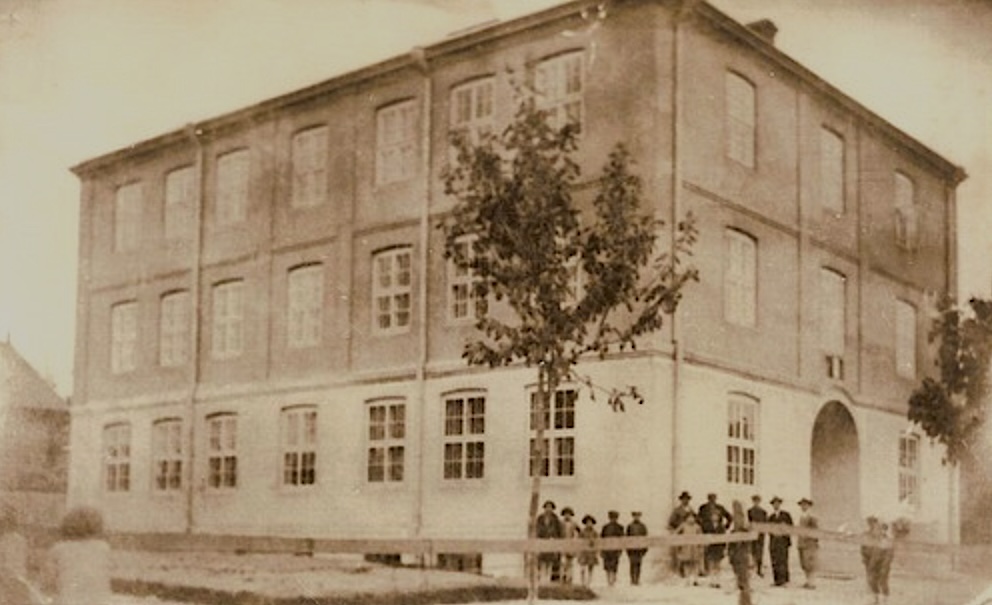
At the school, the sounds of lessons and laughter gave way to engines, shouted orders and the machinery of war. Children watched through fences as the Germans set up their command post in the building and the playground filled with military vehicles and strange towering antennae.
Kit and Karol
The Home Army network in the area was highly organised. It numbered several hundred individuals and reported to Marian Zawarczyński “Ziemowit” in Siedlce. Members used their jobs as cover, be it mill, brewery or rural worker. Józef Legut (ps. Kit) commander in Górki and Sarnaki, lived close to the Gestapo building but also in the forestry area of Hruszniewie. He was “given” a forestry job by friends in the forestry commission, giving him free rein to travel. In the spring of 1944, rumours of German defeats began to stir cautious hope in Sarnaki that the war might finally be turning, but suddenly the number of soldiers increased. April 1944 marked the first V2 explosion. Over the next few months, over 60 were fired over the Sarnaki area. On some days there were up to four explosions.

Of course no one knew what was being fired. The Germans distributed leaflets warning anyone collecting parts of “empty fuel containers” being dropped by planes over the area to surrender them. Józef Kisiel (ps. Karol or Pług), brewery manager who spoke excellent German, regularly plied a non-commissioned officer living in the brewery with beer. To his surprise the officer “let slip that these missiles were being launched from the area around Mielec… These missiles would be fired at England… At the same time, he sketched such a missile in pencil on a sheet of white paper” (Józef Legut, 1960s).
Beer, bikes and the Bug river
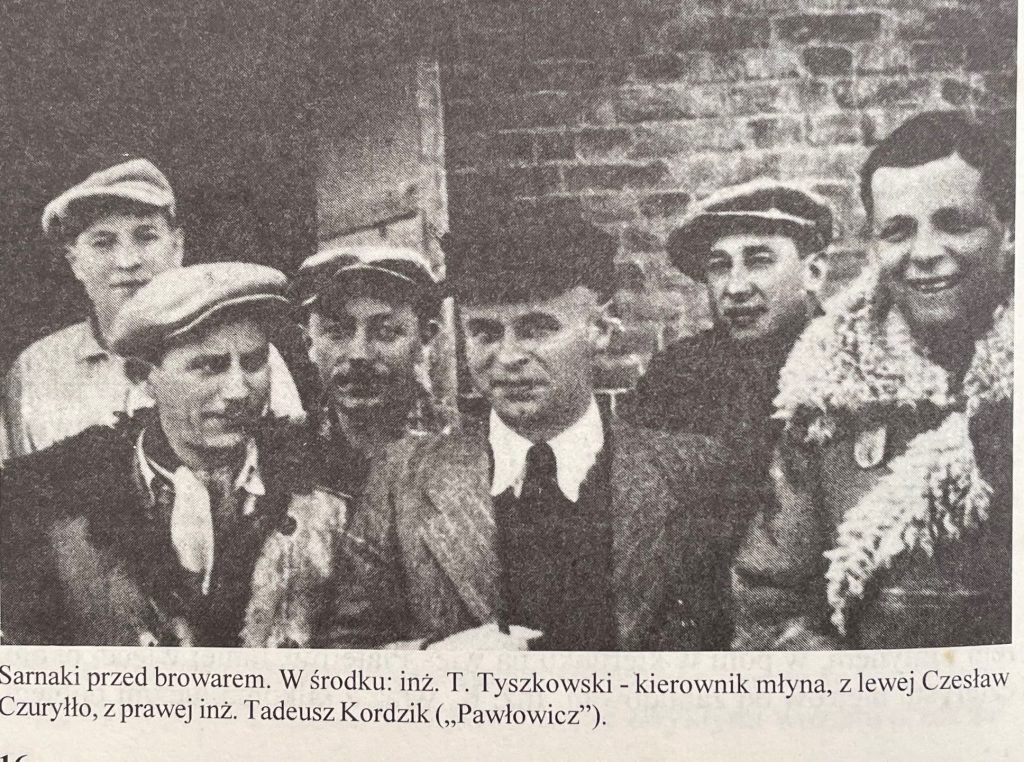
Tadeusz Kordzik ps. “Pawłowicz” from the intelligence branch of the Home Army worked for Kisiel in the brewery. It was so close to the school he could hear the radio signals. Kisiel already knew that the “Krakau” call between 9 – 10 am signalled the missile being fired. As soon as an explosion was heard, around 20 German soldiers would rush to their vehicles and drive to recover the missile’s fragments.
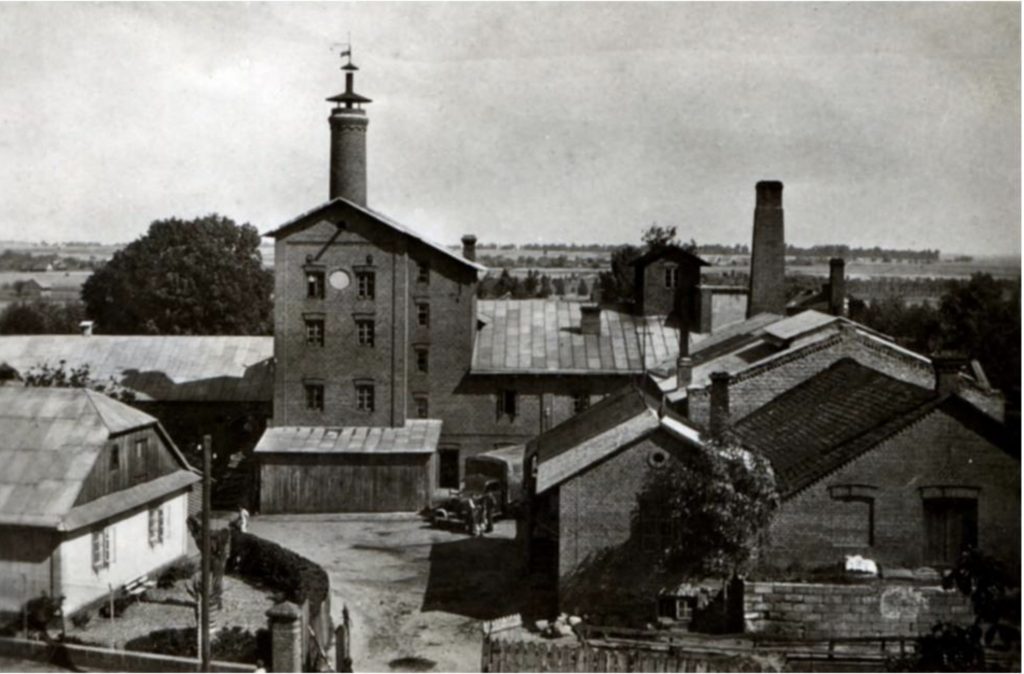
Platoon leader Tadeusz Jakubski (“Czarny”) who commanded around 200 members, set up a permanent intelligence presence along the Bug river. The rural workers had bicycles and would quickly cycle to the site and collect any exploded pieces before the Germans arrived. Vegetable baskets, wagons loaded with sacks or food, were all hiding places to smuggle parts to headquarters in Warsaw. A gyroscope, part of the ‘brains’ of the missile controlling its trajectory, spent time in a bee hive.
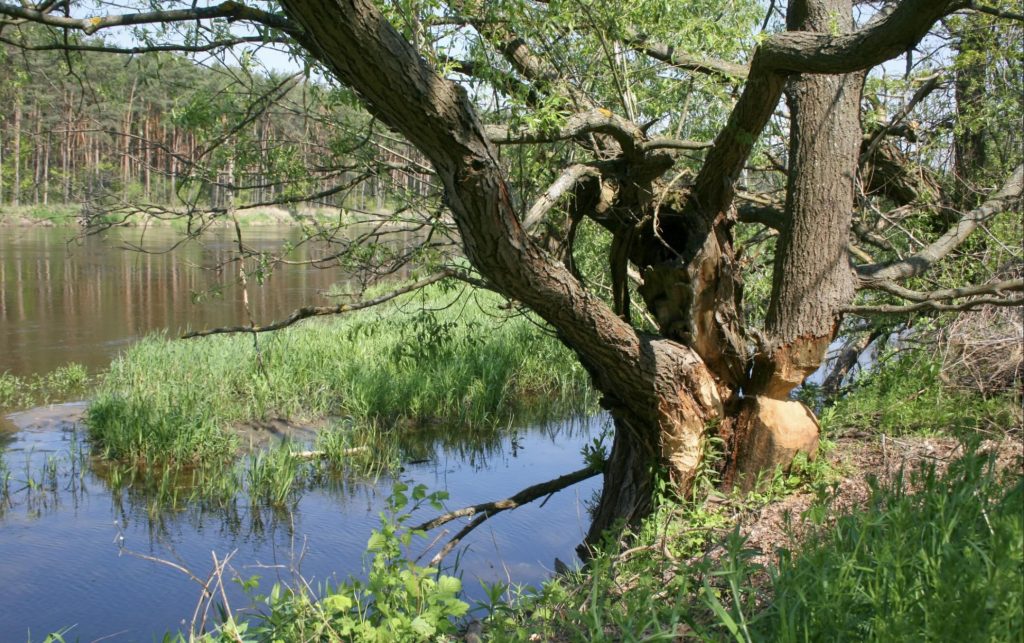
Kisiel was arrested in mid-May but he gave no one away under torture and survived the war. Around 20 May 1944, one of the V2 rockets plunged into the reed beds of the Bug River, five kilometres north of Sarnaki, without detonating. The Germans set off to find the unexploded rocket but searched without success for several days. The intelligence teams soon got there: “The missile’s head was deeply embedded in the mud, while the tail with the rudders was sticking out of the water, slightly covered by bushes” (Józef Worowski 1960s). At dusk, the men waded into the mud and water, managing to conceal the missile within two hours despite its full 14 metre length.
Deadly diversion
On 27 May, the partisan unit “Zenon”, engaged German forces in a carefully planned diversion near the village of Hołowczyce. “The bursts from “Stary’s” light machine gun and the submachine guns rang out, overpowering the dry cracks of rifle fire. At last it was over, figures emerged from between the trees, returning from the diversionary fight. They were carrying someone on a spread-out military cloak. It’s Edek “Słuchawka“….six German soldiers were killed in the clash” (Karol Frankowski ps.”Kajtek”). Two partisans were killed..
At the crash site, six horses arrived, pulling two wagons equipped with chains and ropes. As the teams heaved the rocket from the mud, the missile unexpectedly broke in two. It hardly mattered. Working quickly under the cover of darkness, the resistance loaded the sections onto the wagons. Resistance cavalry patrols and rifle company units with machine-gun nests protected them enroute. They travelled eight kilometres to a barn to hide the parts beneath a thick cover of hay and straw. Weapons experts from the Home Army in Warsaw arrived to dismantle the rocket. Operation “Most III”, the subsequent airlift to London is a separate heroic episode involving the Polish resistance at Przybysławice.
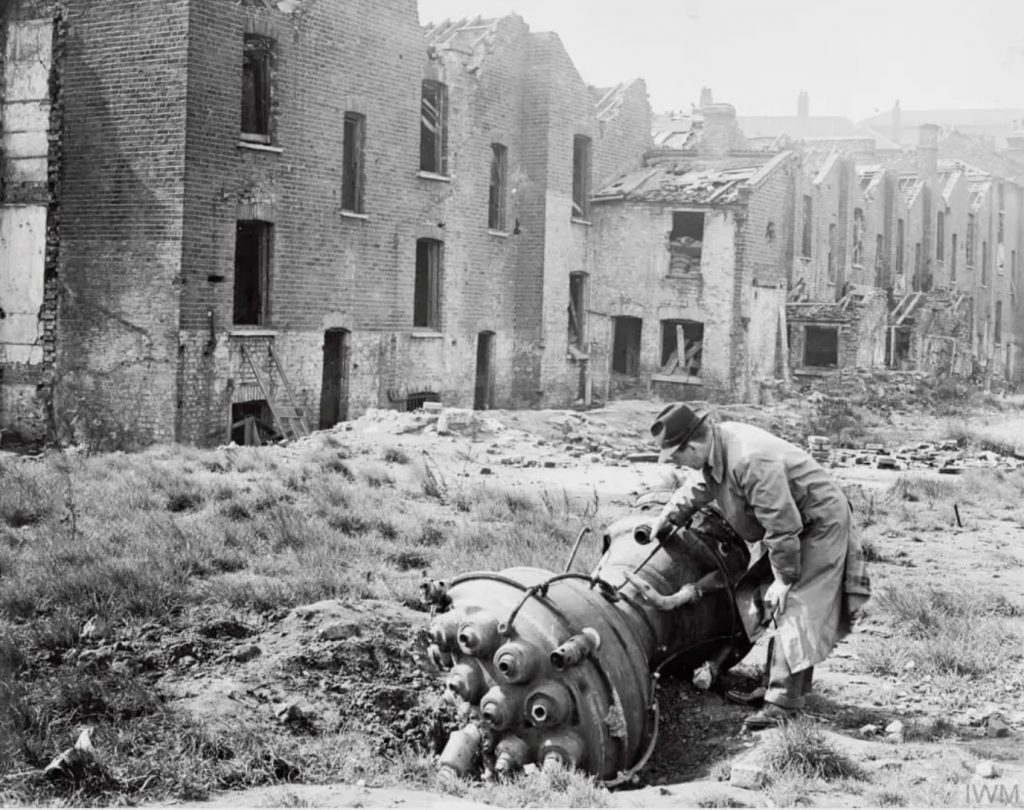
From September 1944, Germany unleashed more than 3,000 V2 rockets on London and Antwerp, killing thousands and wounding many more. By understanding how the rockets worked, British intelligence fed false reports to Germany, causing many V2s to overshoot London. In 1952 Bernard Newman wrote a semi-fictional account of events in Sarnaki, entitled “They saved London“. The men and women on which it was based dare not speak openly about their actions. When the Soviet-backed government took power in Poland in 1945, it targeted members of the Polish Home Army with arrests, imprisonment, and persecution.
Over 50 years later
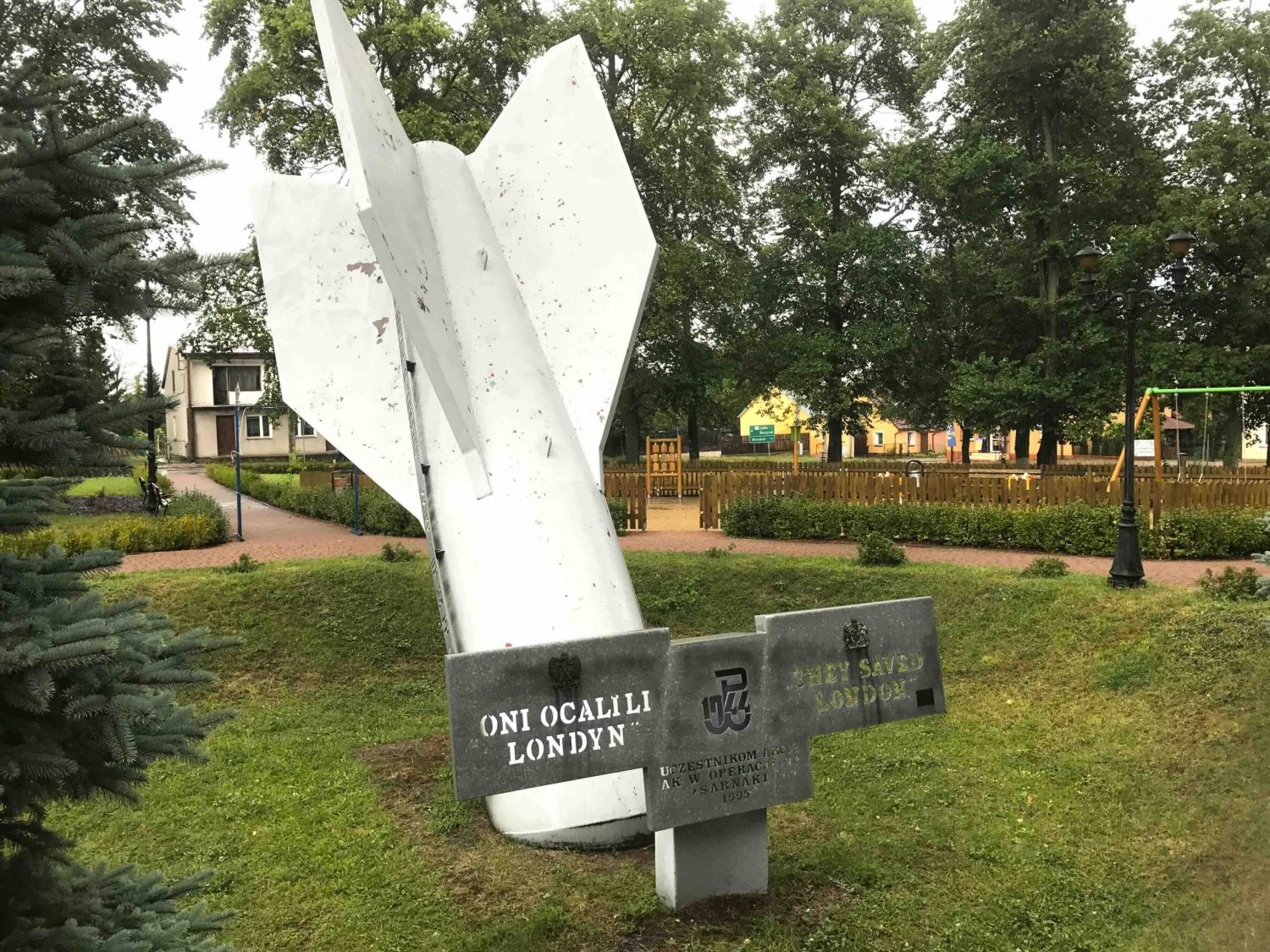
In 1995, Franciszek Lewicki of Sarnaki collated many of the memories recorded in the 1960s, describing their actions modestly. “The underground resistance significantly delayed the implementation of Hitler’s plans in this field. Every day by which the war was shortened saved thousands of lives on both sides of the front lines“. The unveiling of the monument in Sarnaki’s old market square to honour the Home Army soldiers of “Operation V2” took place that same year. During the ceremony, the British Army attache formally thanked the Poles for their vital role in uncovering the construction of the German V2 rocket.
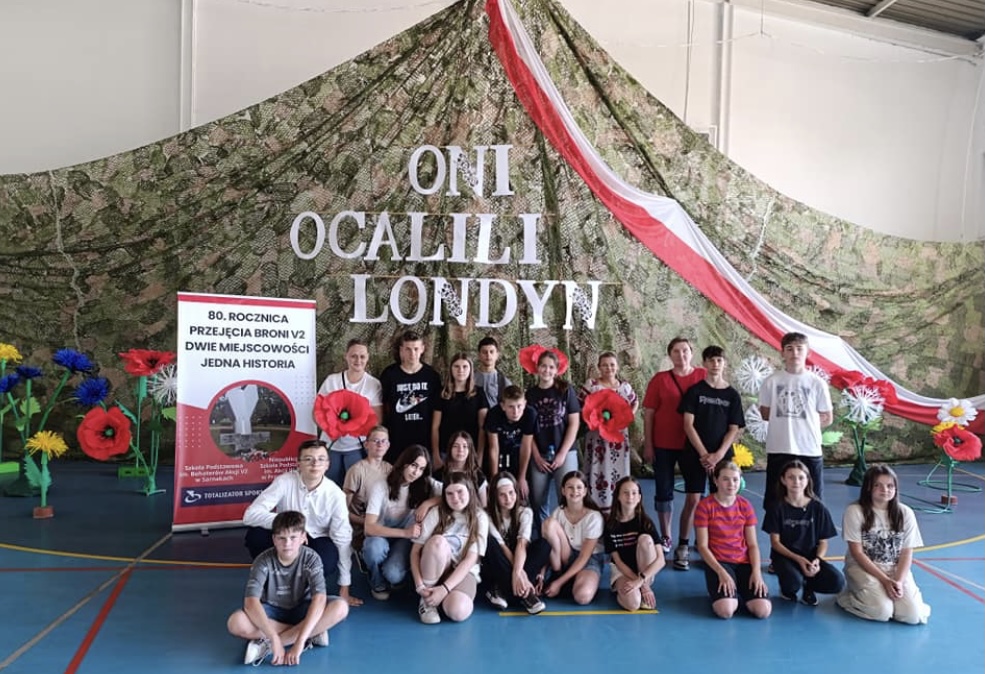
Finally the story of Sarnaki could be told with pride. For many it restored a link to a past once obscured by the shadows of war. That recognition continued in 2007 for the younger generation.The secondary school that once received German coded messages now proudly bears the name “im. Bohaterów Akcji V2 w Sarnakach” – the Heroes of Operation V2.
The following publications have been used for this article as well as online sources:
- Franciszek Lewicki: Wydawnictwa Archidiecezji Warszawskiej, 1995. [Quotes translated into English from this source]
- Rafał Zubkowicz, Sarnaki i okolice: przewodnik turystyczny, PPH “Iwonex” Siedlce 2007
- Szkoła Podstawowa im. Bohaterów Akcji V2 w Sarnakach i Niepubliczna Szkoła Podstawowa im. Akcji III Most w Przybysławicach – 80 Rocznica przejęcia broni V2 dwie miejscowości – jedna historia Sarnaki – Przybysławice. Fundacja Totalizator Sportowy, 2024.
Please note that some of the recollections of members of the Home Army in the 1960s quoted from the booklet by Franciszek Lewicki vary slightly in exact detail.

 1.Tracing Family History pre-WW2
 2. Tracing Family History WW2